Life on the road isn’t easy. From finding parking and weigh stations, to refueling and finding your next load, it’s fair to say that the job requires juggling a lot of information. That’s why we built a mobile app that includes the most useful trucking tools so that truckers have a single place to get the information they need, all in the palm of their hand.
The freight market is inherently complex and unpredictable, never more so than in these recent months. Our mission at DAT is to remove the uncertainty from the market and make it easier to navigate so that our customers can operate more effectively and profitably.
We designed the DAT One mobile app from the ground up, based on our deep understanding of the tens of thousands of drivers who already rely on DAT. Truck drivers don’t want to bounce around from app to app to find the information they need to successfully do their jobs. With DAT One they’ll find the best trucker tools in a single easy-to-use app so they can find all the services they need while on the road.
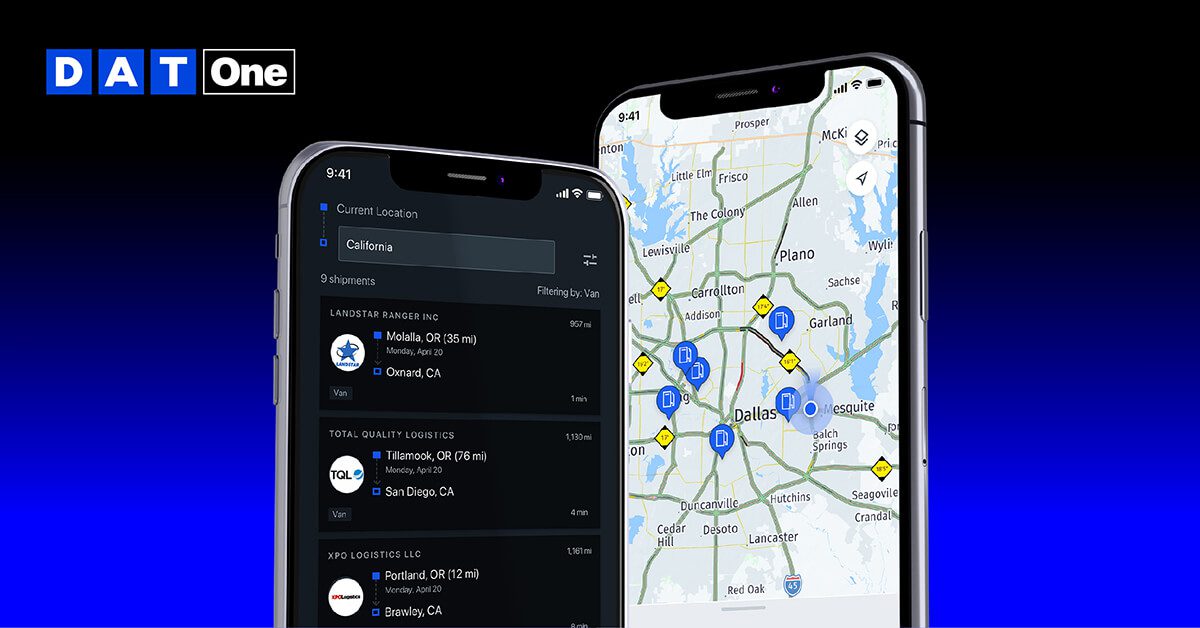
The DAT One app is free of charge. The first version of the DAT One app released today includes:
- Detailed truck maps
- Truck parking
- Favorite truck stops
- Fuel prices
- Weigh stations
- Rest areas
- Discounts on hotels for truckers that can accommodate a full-size tractor-trailer
- Truck services
- Free loadboard of nearby loads–loads within a 200 mile radius of the driver’s location
This is just the start! We have big plans for DAT One and more ideas on how to keep simplifying truck drivers’ life on the road.
Download the DAT One truck loads app for free at the App Store (iOS) and the Google Play Store (Android). For more information about the new mobile app, visit www.dat.com/DATOneApp.